
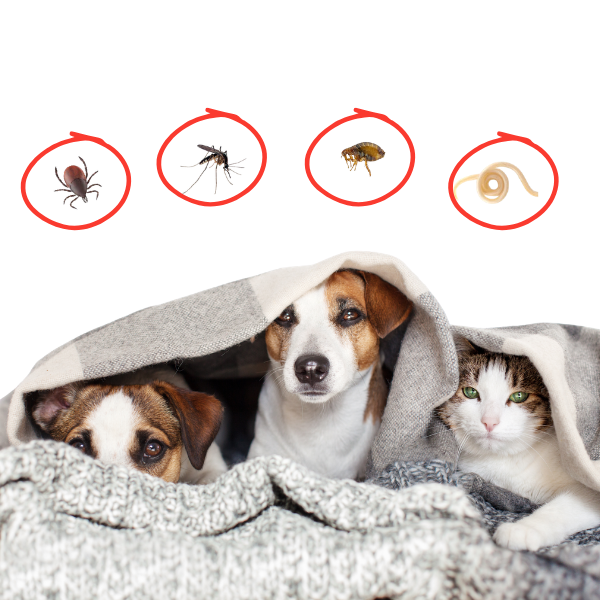
With summer being fairly short in Ontario, we all want to take advantage of the hot weather. When we take a summer vacation, we all know to wear sunscreen and bug repellents. Our furry dog friends need to be prepared to be outdoors too because unlike us, parasites don’t take a vacation!
Fleas and ticks are ectoparasites, which mean they live outside a host. The warm temperatures are ideal for these pests, which increases your pet’s risk as they are outside more often. And since fleas and ticks are so small, you may not even know that your pet has been infested.
Zoomies Without the Fleas
If you do see a flea, that probably means there are more in the surrounding area. Fleas can trigger flea allergy dermatitis, which leads to severe itchiness, hair loss, and irritated skin. If the infestation is heavy, then your dog is at risk of anemia, particularly if your dog is young. Moreover, if your dog ingests fleas, your dog can contract tapeworm, an internal parasite which attaches to your dog’s intestines and feeds on the nutrients from your dog’s diet. Adult dogs experience milder symptoms but puppies are at severe risk of malnutrition, slow growth, and blockages.
Ticks Can Make Your Dog Sick
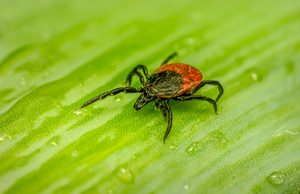
transmit Lyme, Anaplasmosis, Babeiosis,
Powassan virus, Ehrlichia, and possibly
the Alpha-gal syndrome, which causes
a red meat allergy.
There are over 900 species of ticks in Ontario but some are of concern as they feed on dogs and cats. Specifically, the blacklegged ticks, American dog ticks, brown dog ticks, Lone Star ticks, and Asian longhorned ticks are a threat to pets (and people). These ticks spread diseases like Lyme disease, Anaplasmosis, and Ehrlichia, which can affect your pet’s long-term health and well-being. Any time your pet goes outside, do a thorough check of your pet’s body for ticks. This isn’t foolproof, however, as some ticks, like the blacklegged tick, can transmit disease during their nymph stage, when they are smaller than a poppy seed. You may not see or feel them!
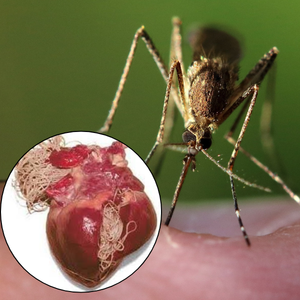
The Only Thing That Belongs in Your Pet’s Heart is Love, Not Worms.
But between the months of May and November, your pet is exposed to heartworm disease. Infected mosquitos transmit the larvae to your cat or dog. These larvae mature while travelling through your pet’s body and become adults once they reach the heart. They can cause serious, permanent damage to your pet’s heart and possibly death. Heartworm disease is treatable if caught early; however, treatment takes a long time, is very difficult on your pet, and expensive.
Parasites – It’s an Inside Job
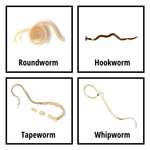
Every time you or your pet goes outside, parasites can be picked up on your shoes, or on your pet’s paws or fur. The ground, the feces of other animals, water, or soil are sources of intestinal parasites, some of which are zoonotic (meaning they can be passed from your pet to you and your family!). Roundworms, hookworms, giardia, cryptosporidium, tapeworms, whipworms, coccidian, and tritrichomonas are such parasites. Symptoms can include diarrhea, vomiting, weight loss, anemia, and malnutrition; however, sometimes, your pet may not show clinical symptoms. It is best to have your pet’s stool tested every 6 months to ensure they are free of parasites and healthy.
Yes, There is Good News!

There are preventatives and other medication that help treat and control both ectoparasites and intestinal parasites. Modern preventatives protect your dog or cat against fleas, ticks, and heartworm; some protect against some intestinal parasites as well. Additionally, it is recommended that you give your dog or cat a dewormer regularly to protect them from intestinal parasites if they go outside. Your veterinarian can recommend a preventative and/or dewormer that will suit your pet’s lifestyle and needs.
Indoor Cats Need Protection Too!

Just because your cat does not go outside doesn’t mean they are not prone to parasites. For instance, you can bring parasites into your home on your shoes and then they can be transmitted to your cat. Also, if you have dog(s), that means your cat is exposed to parasites (including fleas and ticks)!

Summer Should be Fun…but Safe!
Your pets should enjoy the outdoors and be protected against parasites (and therefore, disease). Your veterinarian can help you develop a parasite prevention plan based on your pet’s lifestyle, age, travel, and individual health risks. Some simple steps to ensure your pet has a disease-free and fun-filled summer!


The examples make the trading concepts easier to understand.
AI trading tools