
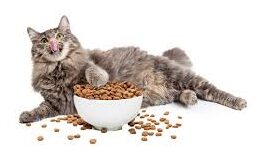
When it comes to your pet’s health, a little extra weight can mean a lot.
You love your pet. They bring you comfort, companionship, laughter, and unconditional love. And one way we often show that love? Through food!
But extra treats, some table scraps, and that heaping scoop of food – they add up! That one extra pound can have a serious impact on your pet’s health.
The health risks associated with one extra pound on a dog or cat is equivalent to the health risks associated with 10 extra pounds on a human.
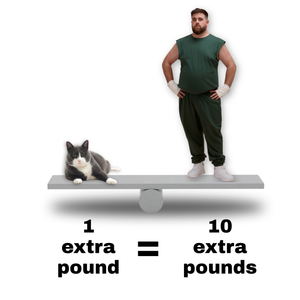
Like in humans, pet obesity has become an epidemic. According to a 2022 survey of veterinary professionals by the Association for Pet Obesity Prevention, 59% of pet dogs are overweight or obese and 61% of owned cats are overweight or obese (Association for Pet Obesity Prevention, 2022). Though these rates are lower than the 72.4% reported for humans, they are still concerning (Fryar et al., 2026).
What is Pet Obesity?
A dog or cat is considered overweight when their weight is 10% – 30% higher than their ideal weight. When their ideal weight exceeds 30% of their ideal weight, a dog or cat is diagnosed as obese.
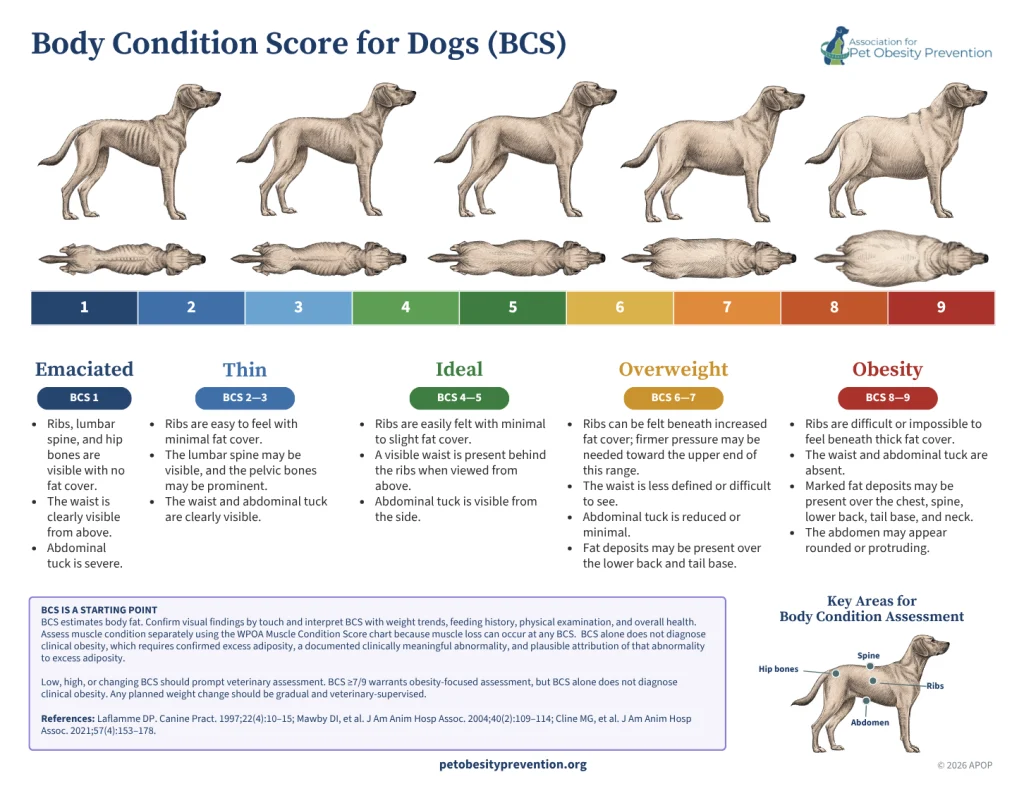
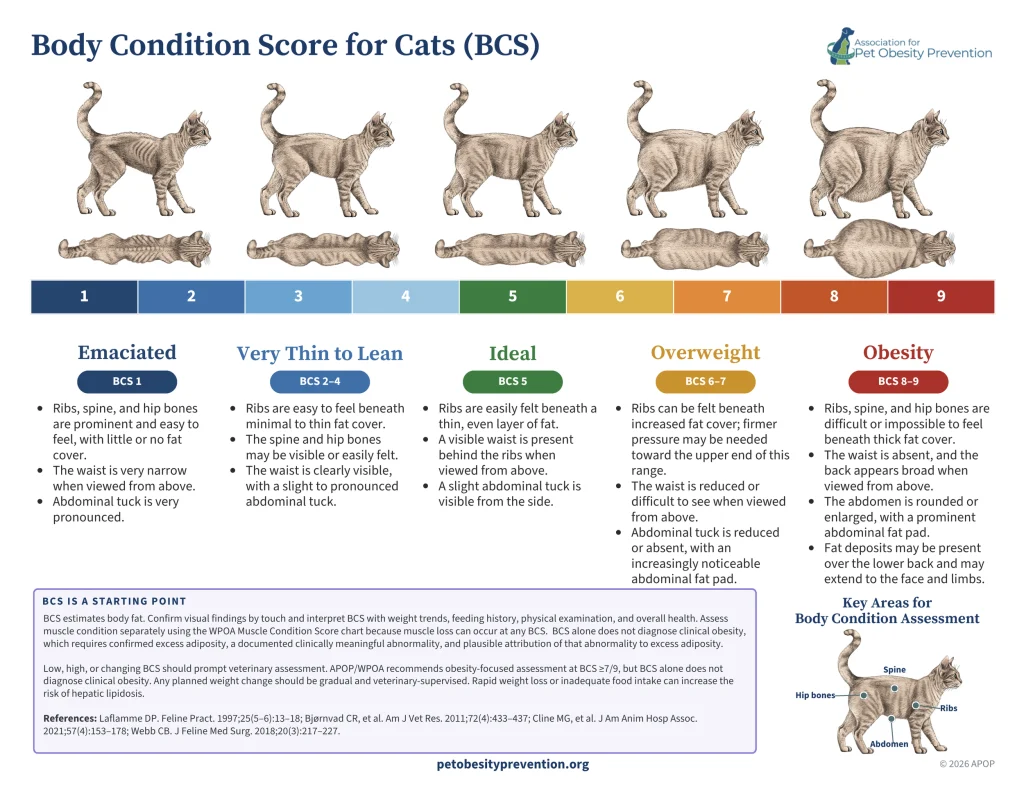
Currently, the most common method to assess your dog’s or cat’s weight is their Body Condition Score (BCS). Dogs and cats are scored on a scale from 1 to 5 or from 1 to 9 based on visual observation (looking at your pet from the top and side views) and physical palpation of their body (running a flat hand over their rib cage).
On a BCS scale of 1 to 9, a dog or cat is overweight if their body condition score is between 6 – 7. If a dog or cat has a score of 8 – 9, then they are considered obese. While the BCS is subjective and does not include your pet’s physiological and metabolic health, it provides a useful starting point for assessing your pet’s body condition and identifying opportunities to improve their health.
Can You Determine Your Dog’s Or Cat’s Body Condition Score?
Below are the BCS score charts for dogs and cats
The rate of pet obesity is increasing and is now considered a physiological disorder by veterinary experts. Fat tissue is biologically active, releasing hormones that promote inflammation, interfere with normal metabolism, and place added strain on the body’s organs. Excess weight can lead to secondary diseases such as diabetes, cancer, heart disease, high blood pressure, kidney disease, orthopedic diseases, skin disorders, and respiratory disorders. Not only do overweight and obese pets experience pain and suffering, the cost of care increases significantly for their owners.
Is Obesity Simply About Eating Too Much and Exercising Too Little?
Although diet and exercise are important, recent research on humans has found that obesity involves other factors. We can extrapolate these findings to our companion animals to include such factors as genetics, breed standards, and gut microbiome.
Genetics
Human research, particularly in twin and adoptive siblings, indicate that obesity can be inherited. A study in the UK found that Labrador retrievers and flat-coated retrievers who were overweight had a genetic mutation. Further exploration has revealed that, both Labrador retrievers and humans who are obese, have the same gene mutation associated with obesity. This gene variant affects the receptor in the hypothalamus that regulates appetite and energy expenditure.
A 2021report by the Royal Veterinary College in the UK found 8 dog breeds that have an increased risk of being overweight compared to mixed breed dogs. These include:
- Pug
- Cocker spaniel
- Beagle
- Golden Retriever
- English Springer spaniel
- Border terrier
- Labrador retriever
- Cavalier King Charles spaniel

Research on cats is mostly inconclusive, although some studies suggest that mixed breeds have a higher risk of obesity than longhaired cats.
Breed Standards
There is little research on a breed’s standard’s influence on obesity but they may also influence perceptions of a dog’s or cat’s ideal body shape, potentially contributing to unhealthy weight expectations.
Your Pet’s Gut Bacteria
Research has indicated that there is a different microbiome composition between lean and obese dogs and cats. But little is known about whether the gut bacteria lead to increased weight or if excess weight causes the gut bacteria to change. Nevertheless, this may explain why some cats easily lose weight on a restricted diet, while other cats, cannot.
Could a Medical Condition be the Culprit?
Before embarking on a weight loss journey, it is recommended that your pet’s total health be evaluated to rule out a medical issue. A veterinary exam and appropriate bloodwork can assess your pet’s overall health and identify potential concerns that may be contributing to your pet’s excess weight.
Helping Your Pet Reach a Healthy Weight
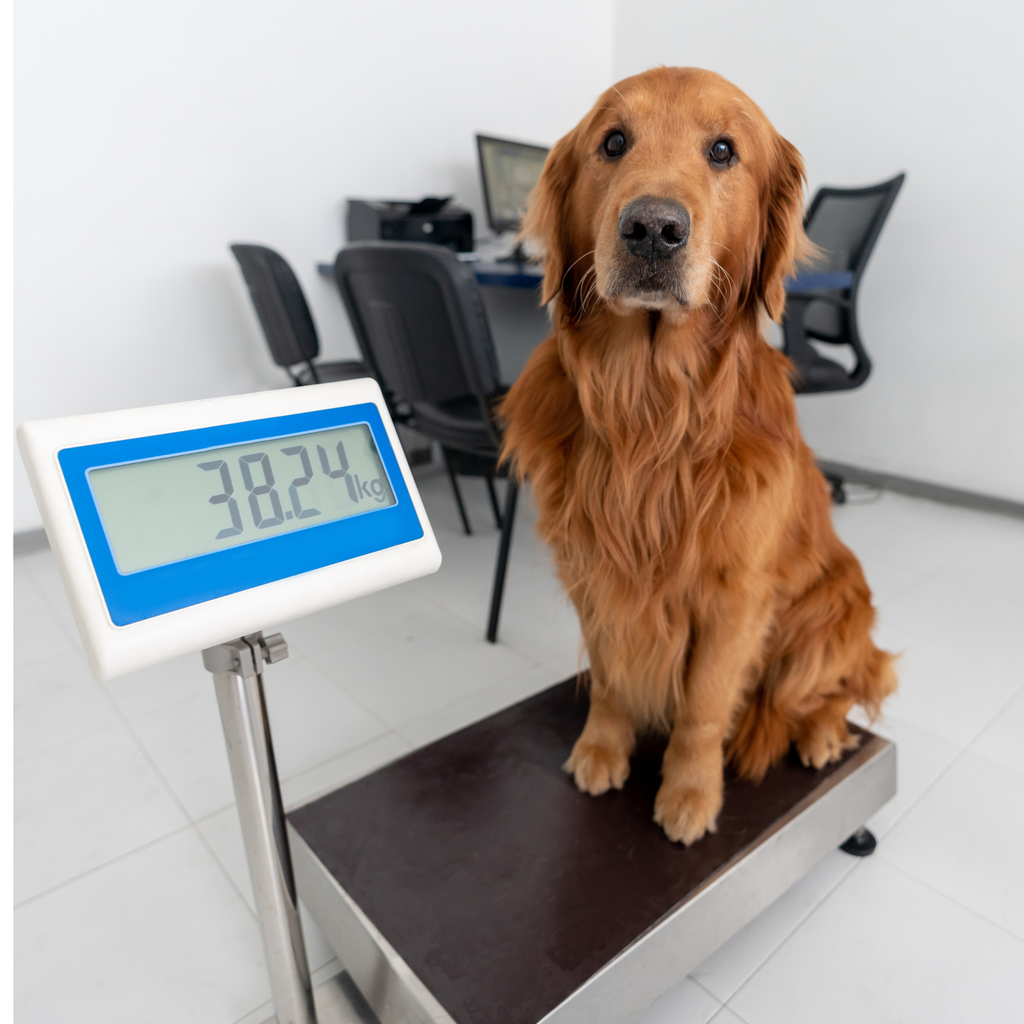
So what does a pet owner do? One of the best ways is through diet.
Diet
Veterinary prescription weight management diets are evidence-based: studies have proven that they support healthy weight loss. Although they may cost more than regular pet store foods, they are clinically proven to help manage weight effectively, thereby reducing the risk of diseases like diabetes and osteoarthritis as well as the owner’s costs of care.
There are various prescription weight management diets that serve different needs. For example, Royal Canin’s Satiety Support helps pets feel full sooner thereby reducing hunger and begging behaviours. Hills Metabolic diet helps activate your pet’s metabolism.
Treats can still be a part of your pet’s routine but they should not exceed 10% of your pet’s daily calorie intake.
Weigh Your Pet’s Portions
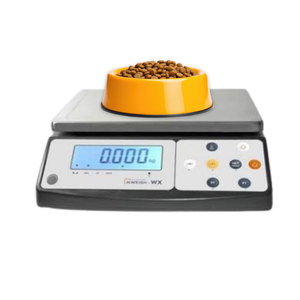
Many owners use a scoop or a cup; but the best way is to weigh your pet’s food. A study found that when people measure their pet’s food with a cup, they feed the wrong amount 80% of the time! The feeding guidelines on prescription diets have both the cups and weights listed so this will help you feed your pet the correct portion.
Every pet is different. Talk to our veterinary team about choosing the right diet, determining appropriate portions, and monitoring your pet’s progress toward a healthier weight.
REFERENCES
Association for Pet Obesity Prevention. (2022). State of pet obesity: United States, 2022 edition. https://static1.squarespace.com/static/6425ec5d33eaaa634113b2d4/t/69a03640d7d4880bb2b8bdb1/1772107328217/State+of+Pet+Obesity-+United+States+2022.pdf
Fryar, C. D., Afful, J., & Saif, N. T. (2026). Prevalence of overweight, obesity, and severe obesity among adults age 20 and older: United States, 1960–1962 through August 2021–August 2023. National Center for Health Statistics. https://www.cdc.gov/nchs/data/hestat/hestat111.htm
German AJ, Holden SL, Mason SL, et al. Imprecision when using measuring CUPS to weigh out extruded dry kibbled food. J Anim Physiol Anim Nutr 2011;95:368–73. 10.1111/j.1439-0396.2010.01063.x [DOI] [PubMed] [Google Scholar
Morris Animal Foundation. (n.d.). Weight loss in cats and dogs. https://www.morrisanimalfoundation.org/article/weight-loss-in-cats-and-dogs
Morris Animal Foundation, (n.d.) Identifying genetic factors associated obesity golden retrievers: https://www.morrisanimalfoundation.org/study /identifying-genetic-factos-associated-obesity-golden-retrievers.


